



MOMO/Dumpling
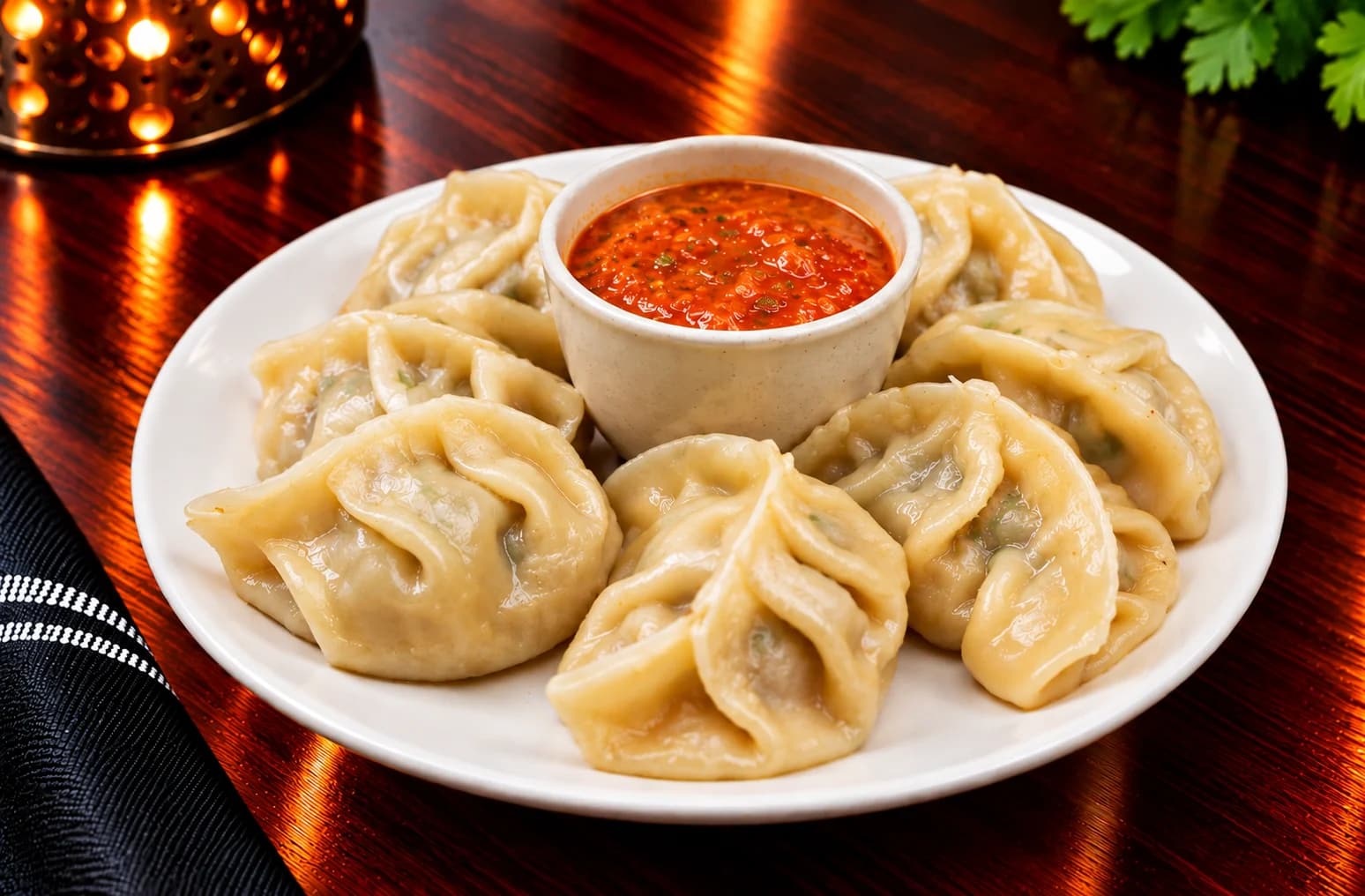
If you order one thing at Curry Gate, make it this. Momo is to Nepal what pizza is to Italy — street food, family food, celebration food and late-night food all at once. In Kathmandu there's a momo shop on nearly every corner, and people argue about their favorite with real conviction.
What momo is. A steamed dumpling. The wrapper is a simple dough of flour and water, rolled thin and pleated by hand around the filling, either into a round purse gathered at the top or a crescent pinched along one edge. The filling is minced meat or finely chopped vegetables, mixed with onion, ginger, garlic, fresh cilantro and a little timur, the Nepali Sichuan pepper that gives Himalayan food its faint citrusy tingle. The dumplings are steamed in a stacked steamer until the wrapper turns slightly translucent and the filling cooks in its own juices.
The juice is the point. A good momo holds a mouthful of hot, savory broth inside the wrapper. That comes from the filling itself: onion and a little fat release liquid as it steams, and the sealed pleats trap it. It's why momo should be eaten whole or bitten carefully, and why a dry momo is a disappointing one. If yours runs down your wrist a little, that's a well-made dumpling.
Where it comes from. Momo traveled into Nepal from Tibet, carried by Newar traders who moved between Kathmandu and Lhasa. Over generations it became thoroughly Nepali, with local spices, local fillings and the achar that now defines it. It's since spread across the Himalayan region and into northern India, and wherever Nepali communities settle, momo shops follow.
Momo vs. other dumplings. People compare it to Chinese dumplings, gyoza or dim sum, and the family resemblance is real. The differences are in the seasoning and the sauce. Momo filling is spiced rather than soy-seasoned, with ginger, garlic, cilantro and timur doing the work, and it's eaten with a tomato-sesame achar rather than soy and vinegar. If you like dumplings of any kind, you'll like momo; it just tastes distinctly of the Himalayas.
The chutney. Momo comes with our momo chutney, a Nepali achar of roasted tomato, toasted sesame, garlic, chili and timur. It's tangy and nutty before it's hot, and it's half the experience. Dip generously. Most tables end up ordering extra.
Which filling. Chicken is the most popular and the juiciest. Vegetable momo is filled with finely chopped cabbage, carrot, onion and seasonings, and is lighter and slightly sweeter. Both are made the same way and served with the same achar.
How spicy is it? The dumplings themselves are mild and savory. The heat lives in the chutney, so you control it with how much you dip. That makes momo one of the best first orders for anyone new to Nepali or Indian food, and a reliable favorite with kids.
How to order it. As a starter for the table, or as a full meal on its own. Ten pieces is a satisfying lunch. In Nepal momo is almost always ordered alongside chilli chicken, and that pairing works just as well here. Add a mango lassi if you plan to be generous with the achar.
Dietary notes. The wrapper is wheat-based, so momo is not gluten-free. Chicken momo contains no dairy as standard. Vegetable momo is vegetarian; ask whether ours contains paneer or is fully vegan. Momo chutney is vegan and gluten-free. Our chicken is halal; confirm with the location when you order.
Takeout. Momo travels reasonably well for a steamed food, but it's best within fifteen minutes. To reheat, steam briefly or pan-fry the bottoms in a little oil, which turns leftovers into crisp-bottomed potstickers and is arguably an improvement. Avoid the microwave, which toughens the wrapper. Momo trays are one of our most popular catering orders in Charlotte.
Available at all Curry Gate locations — Uptown at 101 N Tryon St, South Blvd, and West 24th Street — for dine-in, pickup, delivery and catering.
