




Korma
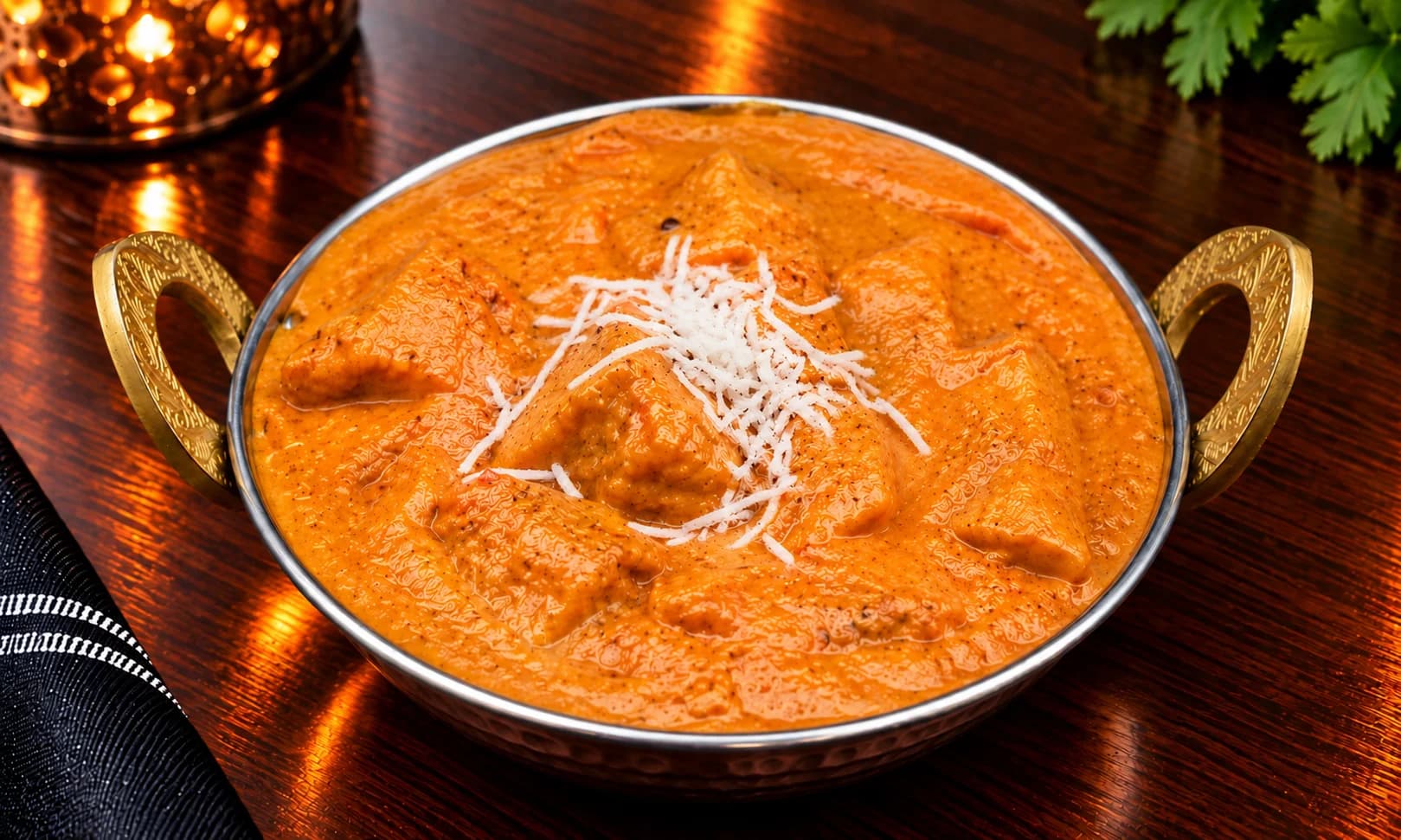
The gentle one, and the most useful dish on any Indian menu for feeding a group that hasn't agreed on anything.
What it is. Korma is a braise — meat or vegetables cooked slowly in a thickened, aromatic sauce with no chili heat to speak of. Ours is built on coconut, simmered with onion, ginger, garlic and whole warm spices: cardamom, cinnamon, clove, bay. The coconut does the thickening and brings a natural sweetness, and the spices are aromatic rather than pungent. Nothing in it is designed to burn.
Where it comes from. Korma is Mughal — a court dish from the empire that ruled northern India from the sixteenth century, where the cooking style favored richness, whole spices, nuts and dairy over chili heat. The word comes from Urdu, meaning to braise. The northern versions use yogurt and ground cashew or almond; coastal and southern versions use coconut, which is the style ours follows. Both are legitimate korma; they simply come from different parts of the same tradition.
How it tastes. Creamy, mildly sweet, aromatic. Coconut leads, with cardamom and cinnamon behind it and a background of onion and ginger. There's no heat at all — this is genuinely the mildest thing we make, and that's the intent rather than a compromise. It's rich, but coconut is lighter on the palate than cream, so it doesn't sit as heavily as a makhani-style curry.
Korma vs. butter chicken vs. tikka masala. All three are mild and creamy, and people mix them up constantly. Butter chicken is tomato-forward with cream, tandoor-cooked chicken, tangy underneath. Tikka masala is similar but spicier and more orange, with grilled marinated meat. Korma has the least tomato, the least heat and the most aromatic spicing — it's the sweetest and gentlest of the three. If butter chicken is still too much for someone, korma is the answer.
Which protein. Chicken is the standard and the safest. Lamb and goat are richer and more traditional — korma was historically a lamb and goat dish — and they stand up to the sweetness well. Shrimp suits the coconut base naturally, and it's the lightest option. Paneer is the vegetarian choice; mild cheese in a mild gravy makes for a very gentle dish, so pair it with something with more character on the table.
How spicy is it? Not at all, as standard. It's the dish we recommend for children and for anyone who's been burned — literally — by Indian food before. That said, we cook to a 1–10 scale, so if you want a korma with some heat behind the sweetness, say so. Around a 4 is a good balance if you want it to have an edge.
How to order it. Naan is the natural partner — butter or plain — and rice works too. Korma is rich enough that it's best as one dish among several rather than the whole meal; put something tangy or dry alongside it, like chana masala or aloo gobi, so the table isn't all sweetness. It's the dish to order when you're feeding people with different tolerances, because everyone can eat it.
Dietary notes. Gluten-free. Since ours is coconut-based rather than cream-based, the meat and vegetable versions are dairy-free and can usually be made fully vegan — ask about ghee versus oil when you order. Contains coconut and may contain cashew or almond depending on the kitchen's blend, so check if there's a nut allergy at the table. The paneer version contains dairy by definition.
Takeout. Coconut-based curries travel well and reheat cleanly. The sauce thickens in the fridge; add a splash of water when reheating. Good the next day.
Available at all Curry Gate locations — Uptown at 101 N Tryon St, South Blvd, and West 24th Street — for dine-in, pickup, delivery and catering.
