



Dal Tadka
The dish people underestimate on the menu and then order every visit afterward. Dal tadka is lentils — nothing more complicated than that — but the technique behind it is one of the most important in Indian cooking, and it's what separates a good dal from a bland one.
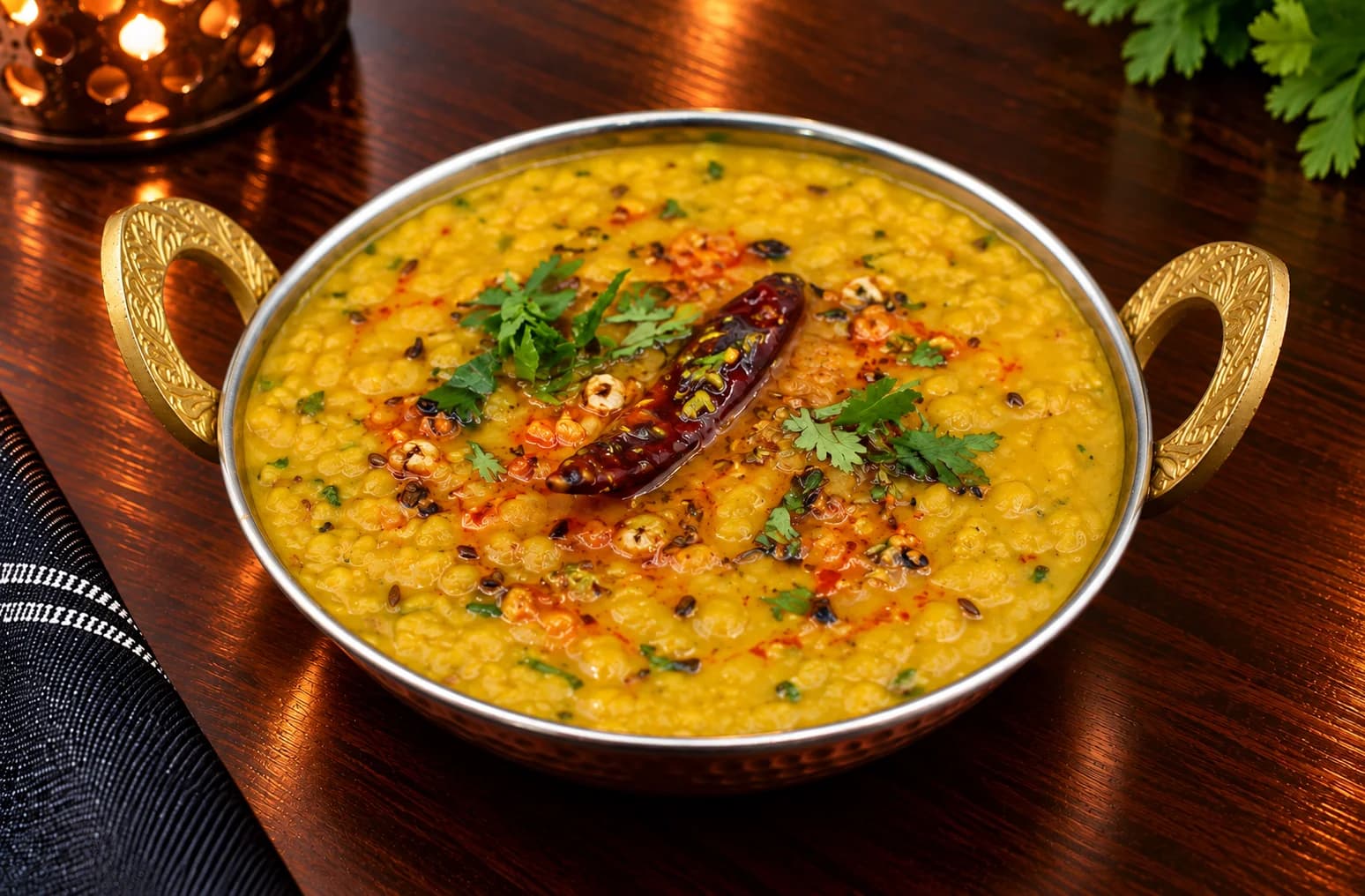
What tadka means. The lentils are simmered first, usually a mix of toor and moong, cooked with turmeric and salt until they break down soft. That part is simple and mostly unattended. The dish is made in the final thirty seconds. Ghee is heated in a small pan until it shimmers, then cumin seeds go in and pop, followed by sliced garlic, dried red chili and a pinch of hing — asafoetida. The moment the garlic turns golden, the whole thing is poured over the cooked lentils, where it hits the surface and hisses.
That technique is called tadka, or tempering, and there's real chemistry behind it. Most of the flavor compounds in whole spices are fat-soluble, not water-soluble — simmer cumin seeds in a pot of lentils for an hour and you extract very little. Bloom them in hot ghee for twenty seconds and you get all of it. Hing in particular transforms completely; raw it's sharp and unpleasant, in hot fat it turns savory and rounded, closer to onion and garlic. This is why dal cooked without a tadka tastes flat no matter how long it simmers.
How it tastes. Warm, savory, faintly smoky from the chili, with soft lentils and the whole spices still visible on top. Mild — there's chili in it, but dried red chili used whole contributes aroma more than heat. Comforting is the honest word for it, and it's the dish that most reliably gets ordered by people who eat Indian food regularly rather than occasionally.
Dal tadka vs. dal makhani. Different dishes that get confused. Dal tadka is yellow lentils, light, finished with a spice tempering. Dal makhani is black lentils and kidney beans slow-cooked for hours with butter and cream — dark, heavy, rich. Tadka is the everyday dal; makhani is the special-occasion one. If you want something light alongside a heavy main, tadka. If you want the dal to be the rich thing on the table, makhani.
How to order it. Dal is a supporting dish by design. It goes with rice, with roti or naan, and alongside almost any curry — a dal on the table makes a meal feel complete in a way that two curries don't. If you're ordering for a group, this is the dish that fills the gaps and keeps the meal from being all one note. It's also a full meal on its own with rice, and a good light lunch.
Dietary notes. Vegetarian and gluten-free. Contains dairy from the ghee, so not vegan as standard — ask and we can temper it in oil instead, which is a straightforward change and makes the dish fully vegan. No nuts. Lentils are high in protein and fiber, which makes this one of the more nutritionally solid things on the menu.
Takeout. Dal travels and reheats better than almost anything else we make — it's a dish designed to be cooked in quantity and eaten over days. It thickens in the fridge; add a splash of water when reheating. Frequently better the second day.
Available at all Curry Gate locations — Uptown at 101 N Tryon St, South Blvd, and West 24th Street — for dine-in, pickup, delivery and catering.
