



Chilli
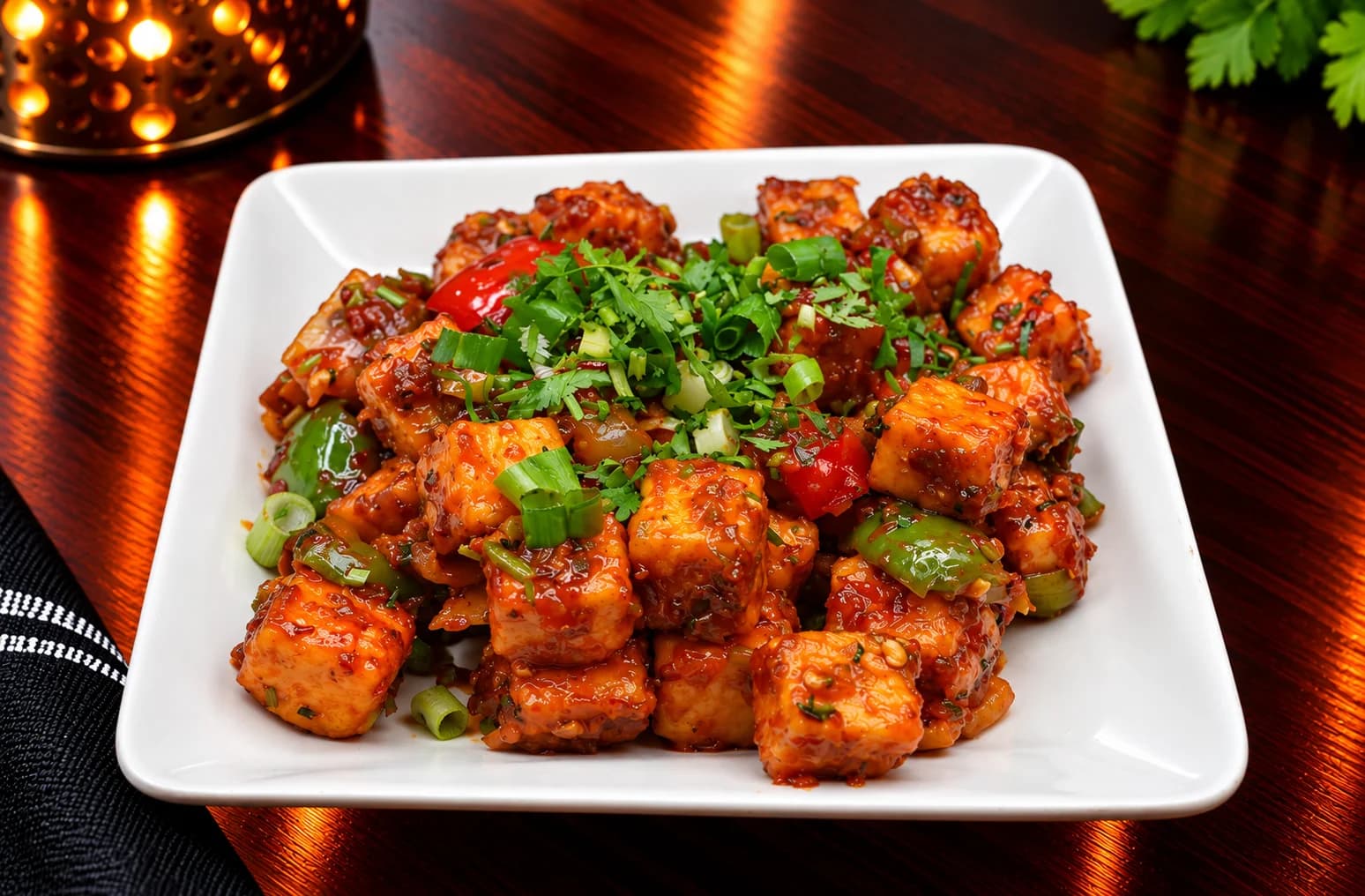
The Indo-Chinese dish people crave by name, and one of the most ordered restaurant dishes across India and Nepal.
What it is. Pieces of chicken, paneer or cauliflower are coated in a light cornstarch batter and fried until crisp. Then everything happens fast in a very hot wok: garlic, ginger and slit green chilies go in first, followed by chunks of onion and capsicum, then soy sauce, vinegar and a little chili sauce. The fried pieces are tossed through at the last moment, just long enough to coat them in the glaze without softening the crust. From wok to plate in a couple of minutes.
Where it comes from. Like Manchurian, chilli chicken is Indo-Chinese — a cuisine that grew out of the Chinese community in Kolkata and spread across the subcontinent. It uses Chinese technique and pantry staples, soy, vinegar, cornstarch, wok cooking, with a level of chili heat and a love of green chili that is entirely South Asian. It isn't served in China. In Nepal it's so embedded that "chilli" appears on nearly every restaurant menu in Kathmandu, usually right next to the momo.
How it tastes. Hot first — green chili is the lead flavor, as the name promises — then tangy from the vinegar, savory from the soy, and aromatic from the garlic and ginger. The onion and capsicum stay crunchy, which gives the dish a freshness that heavier curries don't have. The fried pieces carry the sauce on the outside and stay tender inside.
Dry vs. gravy. The dry version is the classic: a sticky glaze that clings to each piece, eaten as a starter or with drinks. The gravy version has a looser, glossy sauce and is meant to be eaten over fried rice or noodles as a main. Same dish, different job. Order dry to share, gravy for a meal.
Which protein. Chicken is the original and the most ordered. Paneer is the vegetarian favorite — fresh cheese fried crisp holds the sauce beautifully and stays soft inside. Cauliflower, often called chilli gobi, is the vegan option and crisps up well. Pick chicken for the classic, paneer if you're vegetarian, cauliflower if you're avoiding dairy.
How spicy is it? Medium to hot as standard — it's called chilli for a reason. We cook to a 1–10 scale, so tell us where you want it. Pushed high it's genuinely fiery; kept around a 4 it's tangy and savory with real warmth. It's one of the better dishes on the menu for heat-seekers because the vinegar and soy keep it balanced rather than just burning.
How to order it. Dry as a starter with momo — that pairing is standard across Nepal for good reason. Gravy as a main with vegetable fried rice or chowmein. It's also a strong change of pace on a table full of curries; nothing else on the menu tastes like it.
Dietary notes. Contains soy and wheat — soy sauce is wheat-based and the batter usually is too — so not gluten-free. The chicken version contains no dairy. The paneer version is vegetarian and contains dairy. The cauliflower version is typically vegan; ask about the batter and frying oil to confirm. Some kitchens use egg in the batter, so check if that matters.
Takeout. Best eaten immediately while the batter still has crunch. The dry version travels better than the gravy version, since there's less sauce to soften the coating. Reheat in a hot pan or air fryer, not a microwave.
Available at all Curry Gate locations — Uptown at 101 N Tryon St, South Blvd, and West 24th Street — for dine-in, pickup, delivery and catering.
