




Biryani Lamb
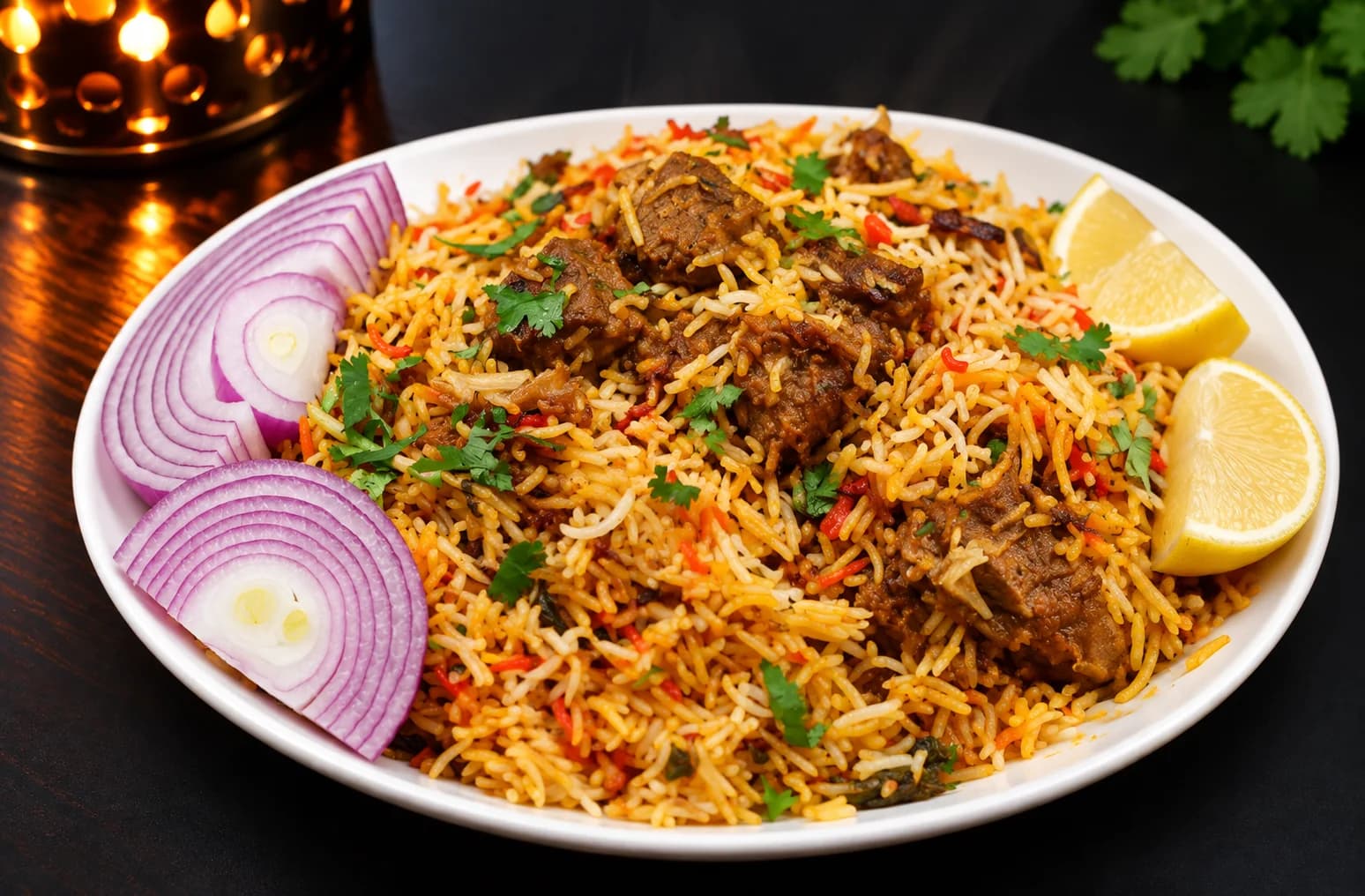
The original, and still the benchmark. Before chicken became the default, biryani was a lamb and goat dish — it came out of Mughal kitchens in northern India where slow-cooked mutton was the centerpiece, and the method was designed around meat that needs time. Everything about dum cooking suits lamb better than it suits anything else.
Why lamb and dum belong together. Lamb is tougher than chicken and carries far more fat and connective tissue. Cooked fast, it stays chewy. Cooked slowly in a sealed pot, that connective tissue breaks down into gelatin and the meat turns tender while the rendered fat rises into the rice above it. Chicken biryani is good because the rice is aromatic. Lamb biryani is good because the rice tastes of lamb. That upward transfer of flavor is the entire argument for the dish, and it only works with meat that gives something up over a long cook.
The method. Lamb is marinated in yogurt, ginger, garlic, garam masala and chili — yogurt matters here, because the acid and enzymes start breaking the meat down before heat is involved. Partially cooked long-grain basmati is layered over it with fried onions, fresh mint, coriander and saffron-steeped milk. The pot is sealed so no steam escapes and cooks slowly over low heat. Nothing is stirred. When the seal comes off, the rice is in separate grains — some white, some gold, some deep orange — and the bottom layers carry the concentrated lamb juices while the top stays fragrant and light. A spoonful from one part of the bowl genuinely doesn't taste like another.
How it compares to the chicken version. Richer, deeper, more savory. Chicken biryani is the crowd-pleaser; lamb is the one to order if you want the dish at full strength. It's also heavier, so if you're eating light or ordering several other dishes, chicken or shrimp may suit better. Regulars who work through the menu tend to land on this one.
How spicy is it? Medium and warm rather than sharp — the depth comes from whole spices and the lamb itself, not chili. We cook to a 1–10 scale, so tell us where you want it. Lamb holds up to heat better than shrimp does, so if you want a hot biryani, this is a reasonable one to push.
What it comes with. Raita, which earns its place — cool cucumber yogurt against rich spiced rice cuts the fat as much as the heat. A squeeze of lemon works too. You don't need bread with biryani; it's a complete dish, and naan alongside usually means leftovers.
Portion. Generous. A full meal for one with some left for the next day, or a fair share between two people also ordering other dishes.
Dietary notes. Contains lamb and dairy — yogurt in the marinade, saffron milk in the layering, raita on the side. Not gluten-free if fried garnishes are included, so ask if that matters. Our lamb is halal; confirm with the location when you order if that's important to you.
Takeout and catering. Biryani is built for transport — made in a sealed pot, served from it, so time in a container changes little. Lamb biryani in particular is often better the next day once the flavors settle. It's one of our most-requested catering trays in Charlotte for weddings, Eid, and family gatherings, where it's usually the dish people expect to see.
Available at all Curry Gate locations — Uptown at 101 N Tryon St, South Blvd, and West 24th Street — for dine-in, pickup, delivery and catering.
