



What Is Chaat? Indian Street Food Explained
Published
Frequently Asked Questions
What is chaat?
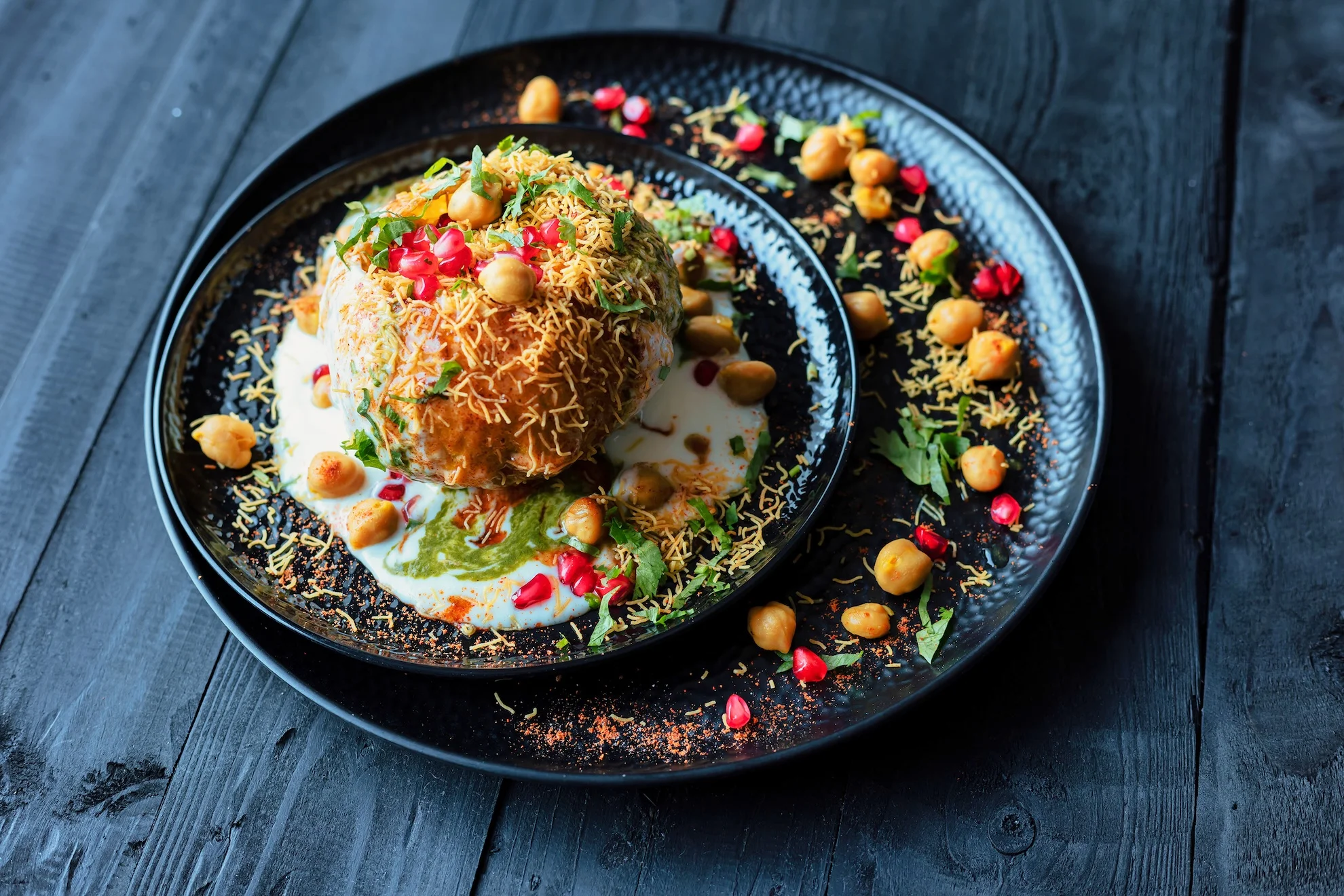
Chaat is a category of Indian street snacks rather than a single dish, built on contrast, crisp against soft, cool against hot, and sour, sweet, salty and spicy together. It's assembled to order from a carrier such as puffed rice or crisp discs, plus tamarind and green chutneys, yogurt, crisp sev and chaat masala.
What does chaat mean?
It comes from chaatna, the Hindi word for to lick, chaat is food you lick your fingers over.
What is pani puri?
Hollow crisp spheres cracked open, filled with potato and chickpea, dunked in cold spiced water flavored with mint, tamarind, green chili and chaat masala, and eaten whole in one mouthful. It's also called golgappa in northern India, puchka in Kolkata and gup chup in Odisha.
What is the difference between pani puri and golgappa?
They're the same dish under different regional names. Pani puri is the western Indian name, golgappa the northern one, puchka the eastern one. The pani and shell size vary a little by region, but it's one dish rather than several.
What is chaat masala made of?
Amchur, which is powdered dried unripe mango, and kala namak, a sulfurous black salt, do most of the work. Around those are cumin, black pepper, dried ginger, asafoetida and coriander. The result is intensely sour and savory.
Is chaat vegetarian?
Almost always. Chaat comes from a street-food tradition serving a largely vegetarian market, and none of the classics contain meat. The wet versions contain yogurt, so they aren't vegan, but the dry ones such as bhel puri and chana chaat usually are.
Is chaat gluten-free?
Mostly not. Sev is made from gram flour and is fine, but papdi and puri shells are usually wheat or semolina. Chana chaat and aloo chaat are safer choices, though it's worth asking, since sev is often scattered on those too.
Is chaat spicy?
Moderate rather than hot, and heat isn't the main sensation. The green chutney and green chili provide the spice, but sourness from amchur, tamarind and lemon leads, and the yogurt in the wet versions cools things down. Because it's assembled to order, it's easy to adjust.
Can you get chaat as takeout?
It doesn't travel. The crisp components soften within a minute or two of meeting anything wet, so by the time it arrives you have the flavors and not the texture. Some places send the components separately to assemble at home, which is the only version that works.
Is pani puri safe to eat?
The main risk with street versions is the water, since the pani isn't cooked. At a stall, prefer high-turnover vendors and be more cautious with pani puri than with dry chaats. In a restaurant with filtered water and refrigerated ingredients, the concern largely disappears.