




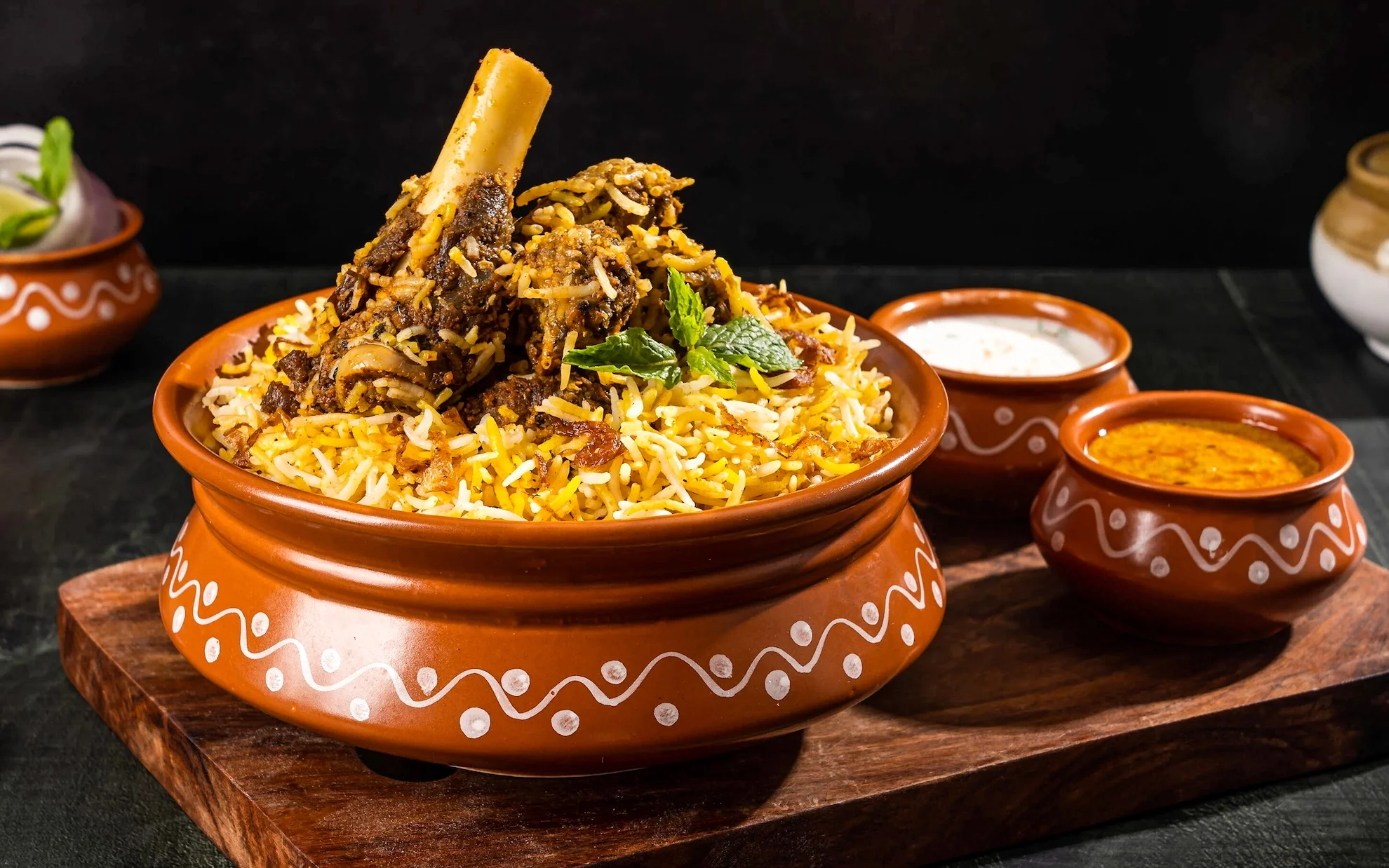
What Is Biryani? Types, Regions and How to Order
Published
Frequently Asked Questions
What is biryani?
Biryani is rice and meat cooked in layers, sealed and steamed together so the rice absorbs the flavor from below. The layering and sealed steaming are what distinguish it from a rice dish with curry served over it.
What is the difference between biryani and pulao?
In biryani, the rice and meat are prepared separately then layered and steamed together, producing uneven color and heavier spicing. In pulao, everything cooks together in one pot from the start, giving a uniform color and a lighter, drier result.
What are the main types of biryani?
Hyderabadi is the most famous and the hottest. Lucknowi or Awadhi is subtle and floral. Kolkata is light and faintly sweet with potato and egg. Malabar or Thalassery uses short-grain rice with cashew and raisin. Dindigul, Ambur, Sindhi, Bhatkali and Kalyani are other distinct regional styles.
Is biryani spicy?
It depends on the style. Hyderabadi biryani is genuinely hot. Lucknowi and Kolkata biryani are mild and aromatic. Heat in biryani also builds as you eat, because it's distributed through a large volume of rice.
What is the difference between kacchi and pakki biryani?
In kacchi biryani, raw marinated meat is layered with parboiled rice and both finish cooking together, which is harder but more intense. In pakki biryani, the meat is cooked first and then layered, which is more consistent and is what most restaurants use.
What rice is used for biryani?
Usually aged long-grain basmati, because ageing reduces surface starch so the grains stay separate. Southern styles use different varieties on purpose, seeraga samba in Tamil Nadu and Kaima or Jeerakasala in Kerala.
Is vegetable biryani real biryani?
It's argued about. Purists say biryani depends on meat juices cooking up into the rice. The more practical view is that a vegetable biryani made by the proper method, layered, sealed and dum-cooked with fried onion, is a legitimate dish. What definitely isn't biryani is fried rice with mixed vegetables stirred through.
What do you eat with biryani?
Raita, mirchi ka salan, thin spiced yogurt, or a light meat broth, plus raw onion and lemon. Biryani is a complete dish, so ordering another curry alongside gives you two competing sauces.
How do you know if a biryani is good?
Uneven rice color with some grains still pale, long separate grains, visible deep-brown fried onion, whole spices present, and meat buried in the rice rather than served on top. Uniformly yellow rice usually means coloring was stirred through the whole pot.
Which meat is best for biryani?
Goat or mutton is the traditional benchmark, with enough fat and flavor to hold up through long cooking. Chicken is the most common version outside India and is a safer choice if you're unsure.
Is goat gamey?
Less than most people expect, and far less than lamb. Goat is lean and mineral rather than strong. Most people who think they dislike goat have either had lamb or had goat cooked too quickly.
Why is goat the traditional meat for biryani?
Goat sits outside the dietary restrictions that apply to beef and pork across the subcontinent, so it was the meat that could be served at a feast where the guest list crossed religious lines. It's also widely farmed on small and marginal land.
What chicken cut is best for biryani?
Thigh and drumstick. Dark meat has more fat and survives the sealed steaming; breast dries out and turns stringy.
What is raw papaya used for in biryani?
Green papaya contains papain, an enzyme that breaks down collagen. Added to a goat marinade, it tenderizes the meat before cooking begins, which is how kitchens get goat and rice to finish together.