




Samosa vs Pakora vs Vada: The Starter Guide
Published
Frequently Asked Questions
What is the difference between a samosa and a pakora?
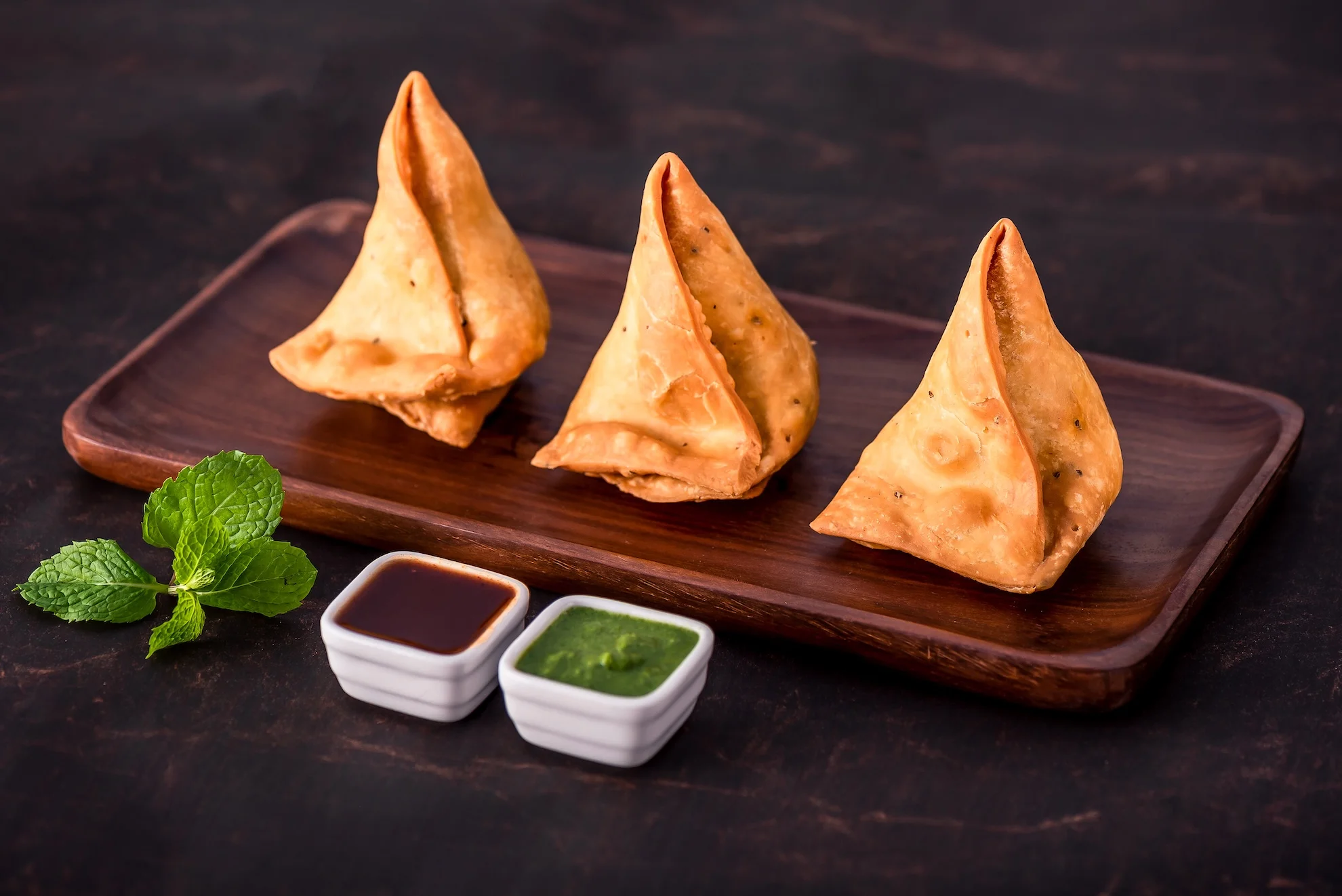
A samosa is a pastry shell folded around a filling and sealed, made with refined wheat flour. A pakora is a fritter, vegetables or meat coated in a gram flour batter and fried, with no separate shell. Samosas contain gluten; pakoras don't.
What is a pakora?
A fritter made by dipping or tossing vegetables in a batter of besan, which is gram flour ground from chickpeas, often with rice flour for crispness and ajwain for flavor, then frying it. Onion, potato, spinach, cauliflower and paneer are the most common.
What is a vada?
A fried item formed from the batter itself rather than wrapped or coated. Medu vada is made from ground urad dal, whipped to aerate it, shaped into a ring with a hole and fried, giving a crisp outside and a light airy inside. It's eaten with sambar and coconut chutney.
Are pakoras gluten-free?
Yes, by construction, the batter is chickpea flour. Two caveats apply for anyone with celiac disease: asafoetida is often cut with wheat flour, and most kitchens fry everything in the same oil, so cross-contamination with samosas is likely.
Where did the samosa come from?
Central Asia and Persia, as the sambusak, arriving in India along trade routes and recorded there by the fourteenth century. It came as a meat pastry — the potato filling is much later, since potatoes only reached India with the Portuguese.
Why does medu vada have a hole?
To increase surface area and let heat reach the center, so the middle cooks through before the outside burns. Without it the center stays dense and undercooked.
What is the difference between onion bhaji and onion pakora?
They're essentially the same thing. Bhaji is the standard British term; pakora is more usual in India, where bhaji often means a cooked vegetable dish instead.
What is batata vada?
Spiced mashed potato rolled into a ball, dipped in gram flour batter and fried. Structurally it's closer to a pakora than to other vadas, since it's coated rather than formed from its own batter. In a bread roll with chutneys it becomes vada pav.
How can you tell if a samosa is good?
By the shell. A samosa fried slowly in moderate oil comes out pale golden and blistered and shatters when bitten. A dark brown, bubbly, slightly soft shell means it was fried too hot and too fast.
What do you eat with samosas?
Tamarind chutney, which is sweet and sour, and green mint-cilantro chutney, which is fresh and sharp. Both cut through the fat of the pastry. A samosa crushed under chickpea curry, yogurt and chutneys becomes samosa chaat.